
Table of Contents
- What Is Black Himalayan Salt?
- What Does It Taste Like?
- Himalayan Salt vs Black Salt: What Is the Real Difference?
- Benefits of Black Himalayan Salt for Modern Businesses
- Is Black Himalayan Salt Good for You?
- Black Himalayan Salt Lamp: A Growing Wellness Category
- Sourcing This Salt for Your Business
- Frequently Asked Questions
Black Himalayan Salt: Benefits, Uses, and a Wholesale Guide for US Businesses
Do you sell food, spa, or wellness products in the US? Black himalayan salt is one of the fastest-growing specialty ingredients your customers want. This guide explains what it is, why buyers want it, and how your business can source it.
What Is Black Himalayan Salt?
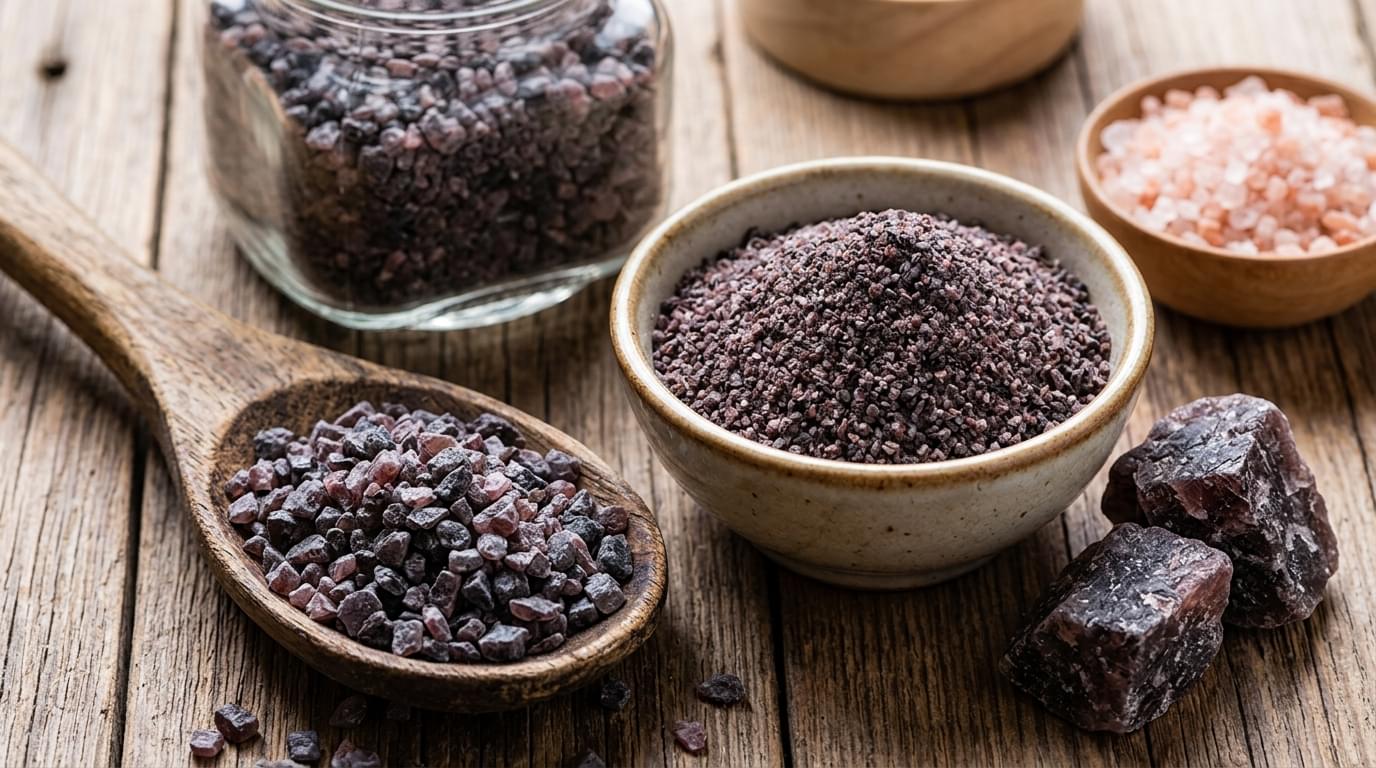
Black himalayan salt, also called kala namak, is a volcanic rock salt. It comes from the salt ranges of South Asia. Unlike the well-known pink variety, this rock salt goes through a traditional heating process. Producers add herbs, seeds, and natural minerals during that process. As a result, the salt develops a grey-pink color and a strong, sulfur-forward aroma. This sets it apart from ordinary table salt.
This unique production process is one of the reasons chefs prefer Himalyan Pink Salt for premium culinary applications. Food manufacturers, plant-based brands, and Ayurvedic wellness companies across the USA also choose our edible black Himalayan salt for its distinctive flavour and authentic origin. As part of the Himalyan Pink Salt edible salt collection, its story-driven heritage makes it easy to market, allowing retailers to position it as a premium specialty product rather than a generic commodity.
Historically, producers heated raw rock salt crystals in earthen kilns. They added seeds, herbs, and charcoal, then held the heat for many hours. As a result, the crystals absorb natural sulfur compounds and trace minerals. This process creates the signature smell and flavor. Once the salt cools, workers grind the chunks into a fine grey-pink powder. Most US buyers recognize this powder as kala namak or Indian black salt.
What Does Black Himalayan Salt Taste Like?
First-time tasters usually notice an egg-like, sulfurous flavor right away. Natural sulfur compounds create this smell during the traditional heating process. However, the aroma fades quickly. A warm, savory, slightly smoky taste remains after that. This is why vegan and vegetarian food brands use it to recreate the flavor of eggs.
This taste profile is a real advantage for your product line. Brands season chaat, tofu scrambles, salad dressings, and spice blends with it. Because of this, it appeals to customers who want authentic, functional ingredients. They are not looking for plain sodium chloride.
The aroma also softens once the salt cooks into a dish. For instance, chefs often add a small pinch near the end of cooking. This keeps the eggy note noticeable without overpowering other flavors. Packaged spice blends usually combine it with cumin, chili, and dried mango powder. This balances the sharpness for first-time American buyers.
Himalayan Salt vs Black Salt: What Is the Real Difference?
Many first-time buyers ask about himalayan salt vs black salt. Is this a real difference, or just a marketing term? In truth, the two products differ in mineral content, processing, color, and use case. Both come from the same broader salt-rich region, though. The table below shows how each type fits a wholesale catalog.
| Salt Type | Best For | Key Advantages |
|---|---|---|
| Pink Himalayan Salt | Everyday cooking, table salt lines, spa and bath products | Mild flavor, rich mineral profile, wide retail appeal |
| Black Himalayan Salt | Specialty food brands, vegan seasoning, Ayurvedic and wellness lines | Distinct sulfur aroma, functional flavor, premium positioning |
| Himalayan Rock Salt Chunks | Cooking blocks, decorative use, animal lick salt | Durable, low processing, versatile for industrial and retail use |
So, is black salt and himalayan pink salt same product with a new name? Not exactly. Is himalayan pink salt and black salt same in mineral makeup? Also no. The heating process for this variety adds sulfur compounds that pink salt does not have. Brands should market them as two separate product lines. Customers search for each one specifically, so this distinction matters.
Benefits of Black Himalayan Salt for Modern Businesses
The benefits of black himalayan salt go well beyond the kitchen. US retailers, distributors, and private label brands can tap into several growing categories with this ingredient.
How US Businesses Use It Across Categories
Grocery chains stock it in the international or specialty foods aisle. Spice companies package it alone or blend it into ready-made mixes. Wellness retailers place it near bath salts and aromatherapy items. Customers who buy one natural mineral product often browse the others too. Because these categories overlap, one wholesale order can support several shelves at once. This lowers your cost per product line.
1. Strong Demand in Plant-Based and Vegan Food Lines
Its egg-like aroma helps vegan food brands directly. Many companies use it in tofu scrambles, vegan omelet mixes, and savory snacks. As a result, wholesale buyers who add this specialty salt to their edible salt catalog reach the growing plant-based market.
2. Natural Mineral Content Without Additives
Kala namak skips heavy refining, unlike standard table salt. It contains natural trace minerals such as iron, potassium, and sulfur compounds. Wellness brands can honestly market it as a natural, additive-free ingredient. This appeals to health-conscious American consumers.
3. Traditional Use in Ayurvedic and Digestive Wellness Products
Ayurvedic tradition uses this rock salt to support digestion. People add small amounts to food and warm water for this purpose. Many wellness brands reference this traditional use in their marketing. That said, businesses should present such claims responsibly. No brand should state that any salt product treats or cures a medical condition.
4. Premium Positioning and Higher Margins
This variety is less common on US shelves than pink salt. Retailers can price it as a specialty product because of that. Distributors who add it to their range often see stronger margins than standard table salt lines.
5. Versatile Applications Across Product Categories
Its benefits extend into bath salts, spice blends, and gourmet cooking kits too. Because of this versatility, one bulk order can supply multiple product lines at once. This reduces sourcing costs for growing brands.
Is Black Himalayan Salt Good for You?
Buyers and end customers often ask: is black himalayan salt good for you? Like any salt, use it in moderation as part of a balanced diet. It still contains sodium. So it adds to daily sodium intake the same way any salt does.
The U.S. Food and Drug Administration notes that the Dietary Guidelines for Americans recommend adults limit sodium to less than 2,300 milligrams per day. So when your brand markets this product, encourage sensible portion sizes. Do not position it as unlimited. In practical terms, its main value lies in flavoring, garnishing, and seasoning. It is not a health supplement or a medical treatment.
Black Himalayan Salt Lamp: A Growing Wellness Category
Beyond food, a black himalayan salt lamp ranks among the most requested decorative wellness products for US retailers. Dense rock salt chunks form these lamps. They produce a warm, ambient glow that appeals to spa owners, yoga studios, and home décor retailers.
Customers already connect himalayan salt lamps with calm, natural aesthetics. A black-toned variant adds shelf appeal to your natural salt lamp collection without a whole new product category. These lamps also pair well with private label branding. You can customize the base and packaging to match your store’s identity.
Sourcing Black Himalayan Salt for Your Business
For B2B buyers, consistent sourcing matters more than a single test order. First, confirm that your supplier controls the full process, from mining to packaging. This keeps quality steady from batch to batch. Next, ask for lab analysis, a Certificate of Analysis, and food-grade certification before you place a bulk order.
At Himalyan Pink Salt, we support US wholesalers, distributors, and private label brands. We supply reliable bulk quantities straight from Pakistan’s salt-producing region. Our wholesale edible salt can include this specialty item. Our private labeling service lets you launch your own branded line without building a factory. We also offer a bath salts and a wholesale salt lamp Together, these give you a complete wellness catalog from one supplier.
We ship directly to US ports with full tracking. This helps you avoid the delays that come from working through several middlemen. Your business gets one supplier relationship instead of many, along with predictable lead times for reorders.
Minimum order quantities vary by format. Small-batch pouches and retail jars usually carry a lower MOQ than bulk pallets of industrial-grade salt. If your brand also sells culinary or spa products, combine orders across our salt cooking plate and aromatherapy lines. This lowers your shipping cost per unit. Before you commit to a large order, request a small sample batch first. Your team can then confirm grain size, aroma strength, and packaging quality. Once you approve the sample, we scale the same quality into a full container order.
Ready to Add Black Himalayan Salt to Your Product Line?
Request a wholesale quote today. Let our team help you build a specialty salt category that stands out in the US market.
Frequently Asked Questions
Is black himalayan salt good for you?
Yes, in moderation. It fits into a normal diet like any other salt. It still contains sodium, though, so it should not replace medical advice or a doctor’s dietary guidance.
Is black salt and himalayan pink salt same?
No. Both salts come from a similar region. However, black salt goes through extra processing that gives it a sulfur aroma and a darker color, while pink salt stays mild and unprocessed.
Is black salt same as himalayan salt?
Not quite. People usually use “himalayan salt” to mean the pink variety. Black salt is a separately processed product with its own flavor, mineral content, and culinary use.
Is himalayan pink salt and black salt same?
They share a regional origin, but retailers treat them as two distinct products. Taste, color, and cooking use all differ between the two.
What does it taste like?
It carries a strong, egg-like aroma at first, followed by a warm, savory, faintly smoky taste. This is why vegan recipes use it to mimic the flavor of eggs.
What is black himalayan salt good for?
Brands mainly use it to season vegan dishes, chaat, spice blends, and salad dressings. It also appears in wellness products such as bath salts and decorative salt lamps.
What is a black himalayan salt lamp used for?
It works mainly as a decorative and ambiance product. Retailers place it in the wellness and home décor category alongside candles and aromatherapy items.
Want to explore our full range before you order? Visit our complete product catalog or reach our export team through our contact page.


