
Table of Contents
- What Is a Tibetan Salt Block, Really?
- Where Does Himalayan Salt Come From?
- Tibetan Salt Block vs Himalayan Rock Salt Cooking Plate
- How a Block of Pink Himalayan Salt Is Mined
- Cooking on a Block of Salt
- How to Use a Salt Cooking Plate Safely
- Why U.S. Businesses Choose Himalyan Pink Salt
- Frequently Asked Questions
What Is a Tibetan Salt Block? The Truth Behind Himalayan Rock Salt Cooking Plates
Many U.S. buyers search for a “Tibetan salt block” when they actually want a genuine Himalayan rock salt cooking plate. The two names get mixed up online constantly, and this confusion costs restaurants and retailers real money.
Because of the mix-up, distributors sometimes list the wrong origin on packaging, and that hurts trust with health-conscious customers. Therefore, this guide clears up the naming confusion once and for all. You will learn what a Tibetan salt block really refers to, where a true block of pink Himalayan salt comes from, and why the difference matters for your B2B purchasing decisions. We will also cover how businesses use these slabs in the kitchen, how the raw material is mined, and what to check before you place a wholesale order. By the end, you will know exactly what you are buying, and why sourcing matters so much in this category.
What Is a Tibetan Salt Block, Really?
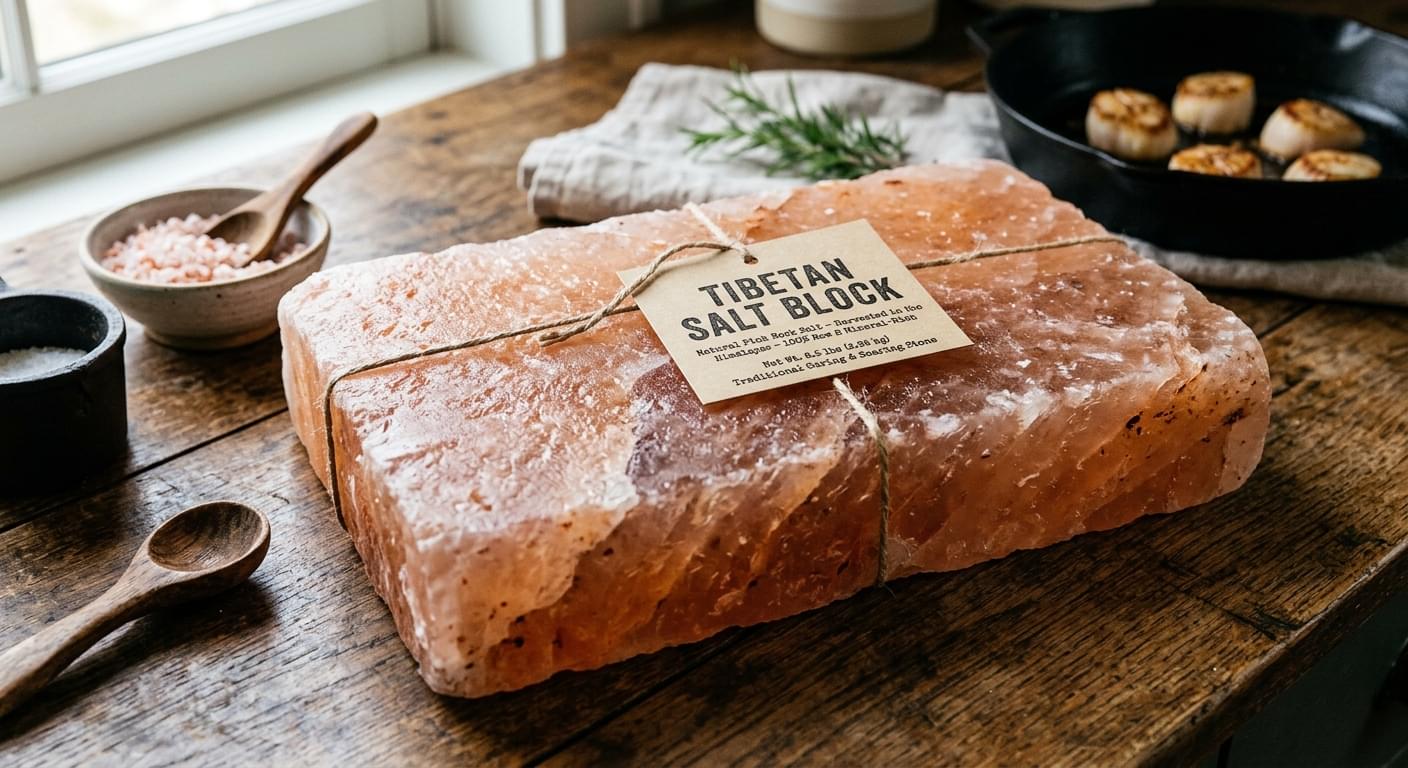
A Tibetan salt block is simply a marketing name. Sellers use it because it sounds exotic, even though the term has no formal geological meaning. In most cases, a product labeled as a Tibetan salt block is actually cut from the same rock salt deposits found in the Himalayan mountain range. Consequently, a Tibetan salt block and a Himalayan salt slab are frequently the exact same material, just marketed under different names.
Some online sellers use the label because Tibet sits near the Himalayas geographically. However, the commercial salt used for cooking plates, lamps, and spa products is mined almost exclusively from the Khewra Salt Range in Punjab, Pakistan, not from Tibet itself. So when a customer searches for a Tibetan salt block, they are usually looking for the same premium cooking slab that wholesalers call a Himalayan pink salt cooking plate. Understanding this naming overlap helps buyers avoid overpaying for a product marketed under a more mysterious-sounding name, and it helps retailers write accurate, compliant product descriptions for their own customers.
Where Does Himalayan Salt Come From?
This is one of the most common questions from new B2B buyers, and it deserves a clear answer. Genuine pink Himalayan salt is extracted from the Khewra Salt Mine, one of the oldest and largest salt mines on Earth. This mine sits in the foothills of the Salt Range in Punjab, Pakistan, and its deposits formed millions of years ago from ancient evaporated seabeds. Over time, mineral deposits gave the salt its signature pink, light pink, and deep pink coloring.
Unlike table salt, this rock salt is extracted in large solid pieces before being cut, polished, or ground into different grades. As a result, a single mine can supply everything from fine edible salt to large cooking plates and decorative lamps. Because the true source is a specific mountain range rather than Tibet, calling this material Himalayan salt is geographically accurate, while calling it a Tibetan salt block is mostly a marketing shortcut. For U.S. importers, knowing the true mining origin matters because it affects purity claims, FDA labeling accuracy, and long-term supplier trust.
Tibetan Salt Block vs Himalayan Rock Salt Cooking Plate: What Is the Difference?
Since both terms often describe the same physical product, the real difference usually comes down to labeling and supplier transparency rather than the salt itself. The table below breaks down how these terms typically compare in the wholesale market.
| Material | Best For | Key Advantages |
|---|---|---|
| “Tibetan Salt Block” (generic listing) | Small retail or one-off gift purchases | Catchy naming, but origin is rarely verified |
| Himalayan Rock Salt Cooking Plate (verified origin) | Restaurants, culinary brands, gourmet retail | Traceable sourcing, consistent density, food-grade certification |
| Wholesale Himalayan Salt Slab (bulk/private label) | Distributors, private label brands, spa suppliers | Factory pricing, custom sizing, Certificate of Analysis available |
As the comparison shows, buyers gain more when they choose suppliers who label products accurately as Himalayan rock salt cooking plates. Clear labeling supports compliance, builds customer trust, and avoids confusion at the point of sale.
How a Block of Pink Himalayan Salt Is Mined
The mining process behind every pink salt mine matters just as much as the final product. Miners extract large salt boulders directly from underground tunnels using controlled techniques that preserve the mineral structure. Afterward, these raw blocks travel to processing facilities where skilled workers cut them into slabs, tiles, or smaller culinary pieces.
During this stage, quality control teams inspect each piece for color consistency, density, and structural integrity. Only pieces that pass inspection move forward into cooking plate production, while lower-grade material gets redirected toward industrial or decorative uses instead. This selective process is exactly why mining Himalayan pink salt requires experienced processors rather than casual exporters.
A rushed or unverified supply chain often results in cracked slabs, inconsistent coloring, or inaccurate origin claims. Because of this, working with a direct manufacturer rather than a reseller gives U.S. buyers far more confidence in what they are actually purchasing at scale. Reliable processors also document every batch, so wholesalers can verify that Himalayan salt rock salt reaching their warehouse matches the quality promised at quote stage.
Cooking on a Block of Salt: Why Chefs and Home Cooks Love It
Cooking on a block of salt delivers a completely different experience compared to a standard grill or pan. When properly heated or chilled, a Himalayan salt cooking plate holds temperature evenly across its entire surface. Because of this even heat retention, food cooks gradually instead of scorching in uneven hot spots.
Chefs frequently use these slabs to sear scallops, shrimp, and thin cuts of beef directly on the salt surface. The natural sodium in the block lightly seasons food from underneath, reducing the need for added salt during preparation. On the cold side, the same slab works beautifully as a chilled serving surface for sushi, cheese boards, and fresh oysters.
Restaurants often present appetizers directly on a glowing pink slab because it elevates the visual presentation at the table. Additionally, the plate’s natural antibacterial properties can slow bacterial growth between uses when you clean and store it properly. This mix of function and visual appeal explains why himalayan pink salt for cooking has become a signature feature on modern American menus, from steakhouse chains to boutique catering brands.
How to Use a Himalayan Salt Cooking Plate Safely
New buyers often ask how to introduce a salt slab into commercial kitchen operations without damaging the surface. The cards below outline a simple, repeatable process that most professional kitchens follow.
1. Warm It Gradually
Place the slab on low heat and increase gradually over 15 minutes. Rapid heating can crack the surface.
2. Sear or Chill
Once hot, sear proteins directly on the surface. For cold service, refrigerate the slab for several hours first.
3. Cool Before Cleaning
Let the plate cool fully at room temperature before rinsing. Never plunge a hot slab into cold water.
4. Wipe, Don’t Soak
Wipe the surface with a damp cloth. Soaking dissolves salt over time and shortens the slab’s lifespan.
5. Store It Dry
Store the plate in a dry area between services. Moisture exposure causes surface pitting over time.
Following these steps consistently extends the life of every slab and protects the investment your business makes in wholesale inventory.
Why U.S. Businesses Choose Himalyan Pink Salt for Wholesale Cooking Plates
Sourcing directly from a manufacturer changes everything for distributors, restaurant groups, and private label brands. Himalyan Pink Salt controls the entire supply chain, starting at the pink salt mine and ending at your warehouse door in the United States. Because there is no middleman, buyers gain access to factory pricing without sacrificing consistency between batches.
The company’s wholesale Himalayan rock salt cooking plates are cut and inspected in Lahore before export, so every shipment meets the same quality standard. Flexible minimum order quantities also make the supplier accessible to startups testing a new product line, as well as established distributors placing large recurring orders.
For businesses that want their own branding, the private label Himalayan salt program allows custom packaging without any manufacturing overhead. Buyers researching the category further can also review the pink Himalayan salt bulk buyer’s guide for detailed sourcing information, or explore authentic Himalayan salt sourcing standards before selecting a long-term partner. Companies looking for edible-grade material can compare the available edible Himalayan salt grades before placing a bulk order.
Altogether, this direct-from-source model is why so many wholesalers describe Himalyan Pink Salt as their most dependable partner in the category, whether the order is a single pallet of cooking plates or a full private label rollout.
Ready to Stock Genuine Himalayan Rock Salt Cooking Plates?
Skip the confusion between generic “Tibetan salt block” listings and verified Himalayan slabs. Get a wholesale quote within 24 hours, direct from the Khewra Salt Range to your U.S. warehouse.
Frequently Asked Questions
Q1: Is a Tibetan salt block the same as a Himalayan salt cooking plate?
In most commercial listings, yes. The term Tibetan salt block usually refers to the same rock salt mined from the Himalayan Salt Range in Pakistan. The material, density, and cooking performance are typically identical once verified against a trusted supplier.
Q2: Where does Himalayan pink salt actually come from?
Genuine pink Himalayan salt comes from the Khewra Salt Mine in Punjab, Pakistan. This deposit formed millions of years ago and remains one of the largest natural salt sources in the world today.
Q3: Is cooking on a block of salt safe for daily restaurant use?
Yes, when the slab is heated gradually and cleaned properly. A well-maintained Himalayan cooking plate can withstand regular commercial use for many months before needing replacement.
Q4: How long does a Himalayan rock salt cooking plate typically last?
With proper care, a commercial-grade slab often lasts through dozens of service cycles. Lifespan depends on thickness, temperature control, and how consistently the storage and cleaning steps are followed.
Q5: Can we order Himalayan salt cooking plates under our own private label?
Yes. Himalyan Pink Salt offers private label packaging, custom sizing, and branding options for cooking plates, so distributors can launch their own product line without setting up manufacturing.
Whether your customers search for a Tibetan salt block, a pink salt mine product, or a straightforward Himalayan rock salt cooking plate, the sourcing story behind the slab is what actually protects your margins and your brand reputation. Choosing a verified, direct-from-mine supplier removes the guesswork and gives your business a consistent, defensible product to sell across the U.S. market.


